Imagine that you are one of the first explorers to North America’s West Coast.
It’s early morning, and after a paddle through the still ocean water, you have docked your canoe on a grey pebble beach. The sun has yet to pierce through the thick fog, and you can see your breath in the crisp air.
Ted Godwin, a Canadian painter, rose to prominence in the 1960s as a member of the Regina Five (1958-1968). The Five were a group of abstract painters, living and working in Regina, Saskatchewan, whose work was comparable to that being created in the New York art scene at the time.
In the mid-1970s, Godwin moved away from pure abstraction to more representative painting focused on landscape. His inspiration came from the expansive prairies, vast mountains and untouched scenery of Canada.
Miz Beaver's Cafeteria and Mr. Brook Trout's Playground #6, 1980
Despite the switch to a more representative technique, many of Godwin’s paintings look like abstract paintings in disguise.
For example, the pattern, brushwork and whimsical composition of Miz Beaver’s Cafeteria and Mr. Brook Trout’s Playground #6 (above) give an abstract feel to the work. True landscapes are also usually characterized by having expansive, wide-views with clear sky-horizon-ground layouts. The perspective of this work, being so low to the ground, only adds to the abstract feel.
Other paintings by Godwin can be found in major public collections across Canada and the United Kingdom.
He has also published a handful of books, where he recognizes emerging artist’s need for a place that they can devote to making ‘art and only art.'
The Victoria and Albert Museum (known as the V&A to locals and visitors alike) in South Kensington, London, has an awe-inspiring collection of decorative arts that spans 5,000 years of human creativity.
The museum opened in 1852 with the aim of making art available to everyone, and then moved to its current location in 1857.
I was completely enchanted by this work when I came upon it while walking through the museum one afternoon. It is oversized, and unlike anything that I had ever seen before — by Picasso or any other artist for that matter.
When visiting big cities, it is easy to assume that their art galleries are going to be impressive and well worth spending an afternoon in, but as I have often discovered, this is not always the case.
But how do you know if a gallery is going to be worth visiting, or not? This post is a good place to start!
The Museum of Modern Art, or MoMa as it is more commonly known, is usually on most visitor’s lists to NYC. More than 7 million people (!) visit this museum every year to take in the 150,00+ artworks that include big names like Warhol, Matisse, Pollock, Van Gogh, and more.
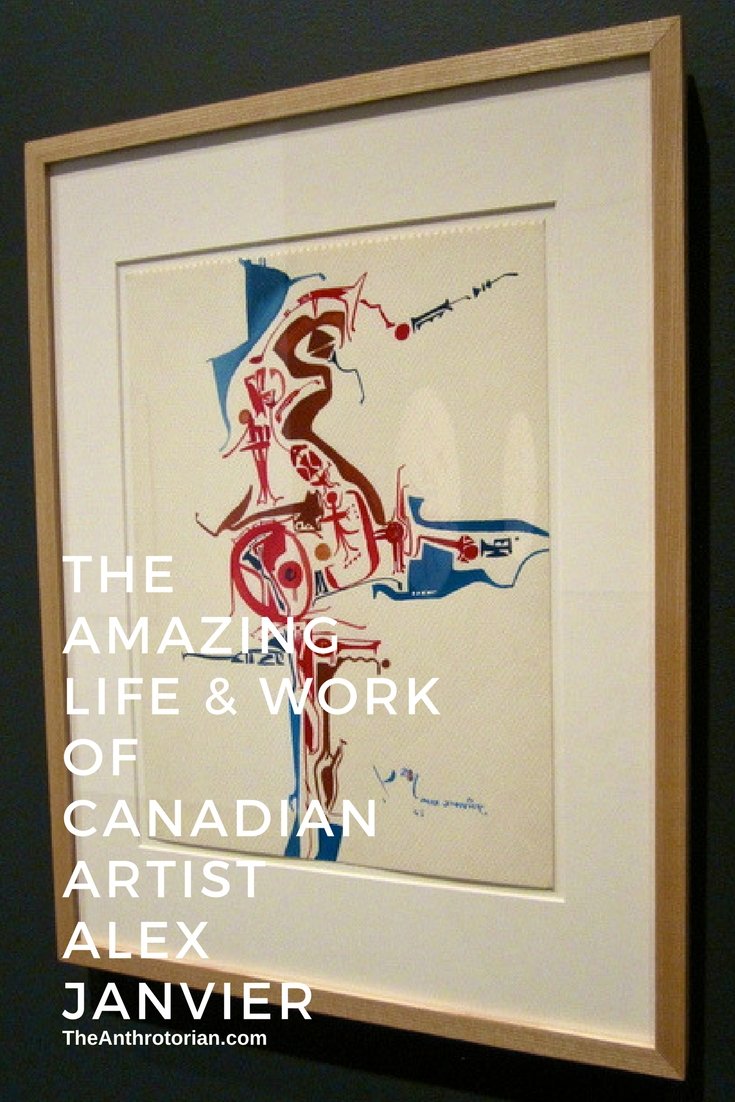
Alex Janvier may be a prolific and significant Canadian Indigenous Artist, but there are no teepees, totem poles, or feathered headdresses in his portfolio.
His impressive 50-year artistic career and his contribution to the art world caused him to receive the Governor General Award in 2008, but there was once a time when the Canadian government was ready to hinder, rather than help, the progression of his career.



This stunning work by Picasso is housed in the Museu Picasso in Barcelona.
I was completely enchanted by this work when I came upon it while walking through the museum one afternoon. It is oversized, and unlike anything that I had ever seen before — by Picasso or any other artist for that matter.