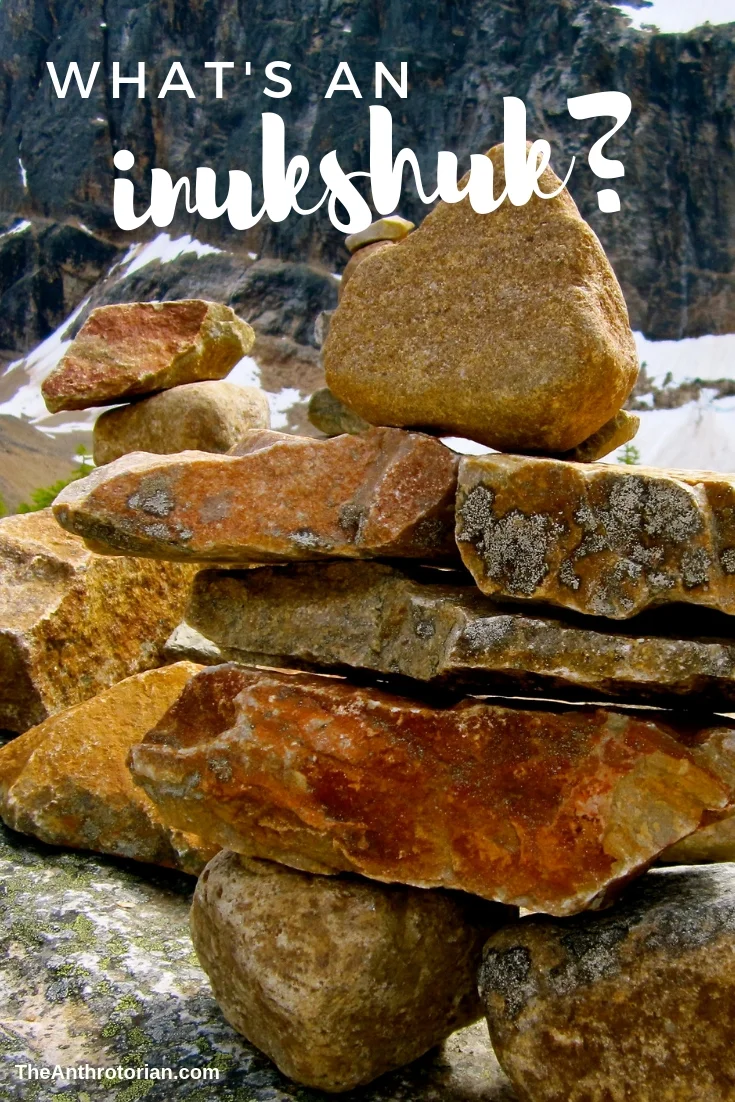
An Inukshuk Built by a Hiker in the Rocky Mountains
Meaning “in the likeness of a human” in the Inuit language, these mysterious stone figures are found throughout the circumpolar world (and often on hiking trails in the Canadian Rocky Mountains) and are the oldest, and most important, objects placed by humans upon the vast Arctic landscape.
Made from un-worked stones found in nature, these monuments are used for communication, survival, and cultural purposes.
The arrangement of the stones is what indicates their purpose. For example, the directions that the arms or legs are pointed could indicate the direction that would allow for safe passage through difficult terrain. An inukshuk with no arms or legs may indicate a food cache, or that good hunting and fish can be found nearby.
These monuments may also mark a place of respect, or a memorial for a venerated ancestor who knew how to survive on the land in a traditional way.
Whether you come across a single inukshuk, a sequence of them, or a bunch arranged in a group, you can be sure that you have stumbled upon a very special place and a symbol of an ancient culture.









Poo-doon-mao oh don gee yo was my (phonetic) address when I lived in South Korea, and one of the first things that I learned to say (once it had been written out for me of course) in Korean. I was told that it meant something like, “the brownish-orange buildings with numbers in the 500s on them.” All I knew for sure was that when I got in a cab and said it to the driver, I would end up in the right spot.