Las Vegas is a magical place. The lights are always sparkling, nothing closes, there are no clocks anywhere, sequins is welcome day or night, free drinks abound, superstars grace multiple stages nightly — anything seems possible. It’s a Disneyland for grownups.
Read MoreTravel Tale: Drinking Ice Cold Soda Out Of A Plastic Bag In Honduras
One of my first international adventures took me to some small towns in Central Honduras, definitely well off the tourist trail. Everything was new — the language, the donkey’s wandering the street, the cobblestones, the jungle, and the food.
Read MoreWhen The Gobi Desert Ruins Your Shirt: Clothing Mishaps In South Korea
Somehow, the left sleeve of my sweater had lengthened while the right had shrunk, and my pants were so stretched out that they were only staying on because I had folded and safety pinned the sides.
I tried to make everything look better by putting on a pair of new heels and some flashy earrings, but after surveying myself in the mirror I was pretty sure that the saggy bum of my pants and the stretched out sleeve of my sweater would not go unnoticed by the extremely appearance-conscious women that I worked with at the English School in Ansan, South Korea.
Read MoreInterview With World Traveller and Filmmaker Jacob Laukaitis
I love connecting with fellow travellers and seeing where they come from, what they are up to, how they sustain their lifestyle, and how they are sharing their experiences with the world! If you know someone who has a story to tell, contact me and they may be featured in a future post!
Read MoreExploring a Magical Ice Castle in Edmonton, Alberta
Wandering through an acre-sized ice castle is no longer only possible in a Disney movie — think Elsa’s icy escape in Frozen. The Utah-based company, Ice Castles, started creating these incredible structures in 2009, and for the first time ever, has brought the incredible frozen wonderland to Canada.
Read MoreTravel Tales: What's Pie? Or, The Challenge of Celebrating Thanksgiving In a Foreign Country
South Korea is a country with a calendar year jam packed with small festivals, celebrations and special days. Teacher’s Day, Children’s Day, Valentines Day, White Day, Love Day, Peppero Day — the list goes on and on (and on and on — seriously, there are an aggressive amount of festivals).
I lived in the country teaching English for 13 months, and after awhile it was easy to tell when a major holiday was coming by the ten-kilogram cartons of grapes, packages of pears and massive jars of kimchi that took over sections of grocery stores and entire corner markets. Gift packs of ramen, crackers, Soju, lotions and shampoos filled the aisles in preparation for the coming celebrations.
Constantly surrounded by these foreign holidays, my roommate Michelle and I, feeling nostalgic for our own traditions, decided to bring a bit of home to South Korea and take on the challenge of hosting Thanksgiving dinner for our foreign colleagues.
A feat even with a fully stocked North American kitchen and grocery store at your disposal, being in South Korea brought a unique set of challenges to this holiday.
Cooking a turkey was out of the question because none of us had an oven in our apartment (this is a thing in South Korea — most people don't use ovens), so we had to settle on some precooked chickens from the grocery store as our main dish.
It was easy enough to find the vegetables that we would need, and after spending a few painstaking hours combing the foreign markets in Seoul, we managed to track down an ancient looking package of gravy mix and some boxed stove-top stuffing.
It wasn’t until we stumbled upon a lone can of pumpkin pie filling — hidden in a dark, cramped corner of the underground Hanam foreign market in Itaewon (a neighbourhood in Seoul) — that the thought of cooking dessert had even crossed our minds. The sheer luck of finding that can led us to believe that it was our destiny to make pumpkin pie (even though, as you will recall, we didn’t have access to an oven), be heroes to our friends, and host the BEST Thanksgiving dinner made in a foreign country EVER.
You might ask why we didn’t just buy a pie.
The short answer: South Koreans do not eat pie.
The long answer: while there were bakeries in the country, when I lived there, they didn’t make conventional items that would be found in bakeries in the western world. They were full of sickly sweet breads, hard flat pastries, fluffy pink cakes and mystery buns with red or black bean paste concealed inside them (I bit into what I thought was a chocolate croissant one morning to find that I was terribly, terribly wrong). I had never seen anything even resembling a donut, a cupcake or a gooey chocolate chip cookie, let alone something as radical as a pumpkin pie in a bakery. This lack of interest in North American-style baked goods — and the lack of ovens in standard apartment kitchens — also meant there was no baking aisle well stocked with flour, spices, sugar and other ingredients that would be found in the standard grocery store at home.
Acknowledging all that was against us, we did the only logical thing that we could think of — called my mom. Since it was the middle of the night for her, it took me a few minutes to get her to understand that I wasn’t waking her up because of an emergency — I just needed some help making piecrust.
After she stopped laughing, she managed to find and read me a recipe which I scribbled down on the back of a receipt I found in my wallet, and handed off to Michelle who plunged down the small aisles of the foreign market desperately hoping that we would be able to find everything on the list. Luck was on our side, because after a thorough search we managed to find everything but condensed milk, which we discovered was easy enough to supplement by throwing regular milk, sugar, butter and water into a pan (thank you Google).
As we rode the subway home, trying to balance our ingredients haphazardly on our laps, we realized we had to face the elephant in the room and try to figure out how we were going to bake the pie.
After throwing out ridiculous ideas like making an oven out of a box (clearly a fire hazard) or cooking it on a small BBQ (just a bad idea thrown out in desperation), we decided to try and put ourselves in the hands of one of our local bakeries and their industrial sized ovens.
Once we got back to our apartment, we set our plan in action by calling Wendy — one of the Korean teachers we worked with who had offered us her services as a translator. We were hoping to have her explain our situation — over the phone in Korean — to the people working at our local bakery and then have her ask them if they would be willing to bake the pie for us in one of their ovens.
Like my mom, Wendy laughed for a few minutes and thought we were nuts, but agreed to help us.
Early the next morning, after prepping the pie, we carried it carefully to the closest bakery. Luckily the store’s owner happened to be working and once we had Wendy on the phone, we handed it over to him. After a few tense moments, he laughed and nodded at us, handing back the phone and Wendy confirmed what we had already guessed — he had agreed to help us out! Elated, Michelle and I left our pie in his hands and ran home to start preparing the rest of the meal.
After a long day of non-stop chopping, mixing and cooking, I left to pick up the pie about an hour before our friends arrived.
The minute I walked in the door of the bakery and saw the owner’s nervous face, I knew that something was wrong.
He slowly opened the lid of the white square box that had been sitting on the counter in front of him, and pointed inside at a lumpy mess, shaped sort of like a pie. Not even thinking that it needed to be explained, we hadn’t told him not to take the pie out of the pan when it was done baking. He — of course — had, and as a result the pie had completely fallen apart. Seeing how badly he felt and not wanting to make him feel worse, I gave him my biggest smile, bowed and thanked him warmly a few times before I left with my sad lump of pie.
We recounted our saga, amidst tears and laughter, while serving our sorry looking pie crumble to our surprised friends. When I finally sat down and took a bite of it myself, I was shocked to find that — despite its appearance — it was (and still is to this day) by far the best pumpkin pie that I had ever tasted.
Related Posts


5 Things To See In The Marrakesh Medina
Are you looking for things to do in Marrakesh? You've come to the right place!
In between getting lost in the maze of narrow streets bordered by red walls draped in vibrant, hand-dyed carpets, there are some incredible places to see and experience in Marrakesh! Here are five of my favourite spots.
1. Djemma el-Fna
I had heard that Djemaa el-Fna, the gigantic main square in Marrakesh, was an open-air theatre full of action, entertainment and general hoopla, but words can not describe what was waiting for me when I wandered there one night as the sun was setting.
The chaos that greets you has been non-stop since the square was the site of public executions in AD 1050 (the name means "assembly of the dead"). It is such an incredible collision of Moroccan culture that UNESCO declared it a "Masterpiece of World Heritage" in 2001.
Camera at the ready and all senses on alert, I walked past snake charmers right out of an Indiana Jones flick blasting oboes to calm hissing cobras, fully veiled female henna tattoo artists would suddenly appear beside pulling me towards their stools, and monkeys on leashes that sat obediently next to the feet of their owners.
Stalls piled high with figs and oranges were lit by hanging lights and seemingly out of nowhere, benches, tables, and cook-tops appeared where chefs were prepping fragrant traditional meals that would break the Ramadan fast for the day. (Apparently what I saw was tame compared to what occurs outside of the month of Ramadan.)
Surrounding restaurants open their rooftops to tourists — the perfect spot to enjoy the show!
2. Bahia Palace
This gorgeous, historic palace has floor-to-ceiling decoration that was begun in the 1860s by Vizier Si Moussa and then was completed between 1894 and 1900 by Vizier Abu 'Bou' Ahmed. It has been home to rulers, warlords and French colonizers, but now lies empty — other than the tourists that filter through daily, of course.


The incredible pointed, gilded, and inlaid ceilings will have you looking up in the Grand and Petit Courts, but don't forget to look down at the incredible mosaic floors, and stunning doorways. There are multiple courtyards and rooms to stroll though, but no furniture remains.
Though you can't visit the entire 8 hectares and 150 rooms, the opulent harem rooms are open to the public.. This is where Vizier Abu 'Bou' Ahmed kept his four wives and 24 concubines.
3. Dar Si Said
Only a short walk away from the Bahia Palace (there are signs to help you navigate), this incredible structure showcases the city's riad architecture and is the home to a spectacular painted wedding-chamber dome.
It houses the Museum of Moroccan Arts, and has an incredible collection of historic artifacts from all over the country.
Because it is located off the beaten path, it doesn't get the same amount of traffic that a lot of other sites get, but it is well worth a visit. Make sure not to miss the beautiful central garden!
4. The Souq
I rarely get lost when I am in a different city. As long as I have a map with me, I can usually find my way out of a wrong turn pretty easily. In the souq (market) in Marrakesh however, I didn't stand a chance. I attempted to navigate the winding, twisting alleyways multiple times and each time ended up completely lost surrounded by carpets, cushions, lanterns, spices, and shoes.
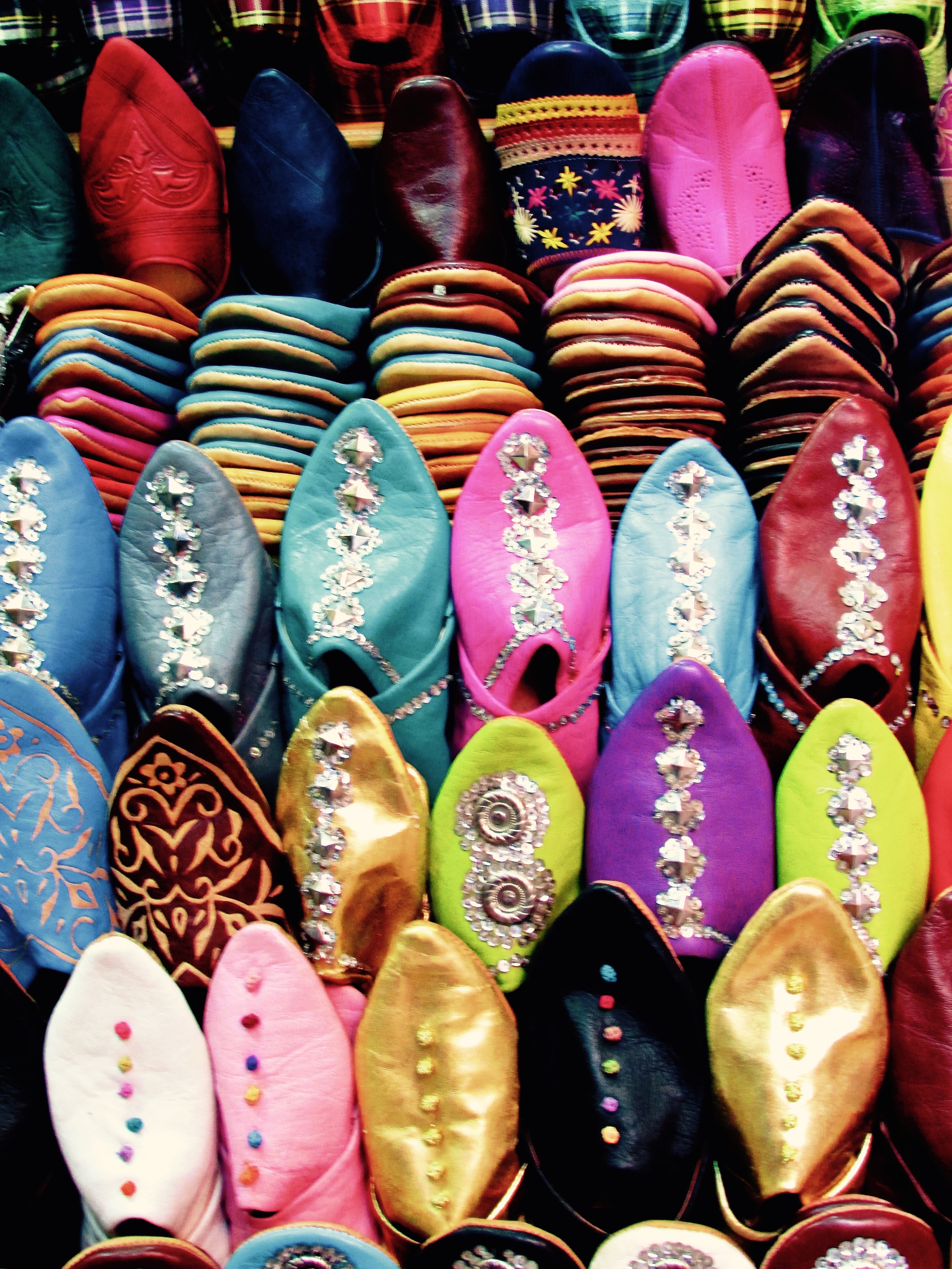

The colours, smells, and shiny objects overflowing from the stalls around me were only slightly more distracting than the shop owners calling out to get my attention in any way possible.
It was a completely disorienting, adrenaline-pumping, five-sense engaging experience that I have never had in a market anywhere else in the world!
5. Hammam
I encourage all visitors to Morocco to skip a tourist spa and experience a public hammam (public bathhouse). Entry fees are cheap — $3.00-5.00 — and all you need to bring is a towel! Soap is available to purchase if you want (I highly recommend it as it makes your skin really soft), but you are welcome to bring your own.
Most locals strip down entirely, but you can leave your underwear on if that makes you more comfortable. You will then be taken to a big tile room with the other hammam-ers (don't worry, the sexes are separated), be given a pail to fill up with water, and you can then sit or stand and scrub yourself clean, rinsing as needed.
Why not just have a shower at home, you ask? For the experience of course! Morocco is essentially a desert, and so public hammams are a way for locals to save water and money. AND, for just a few extra dollars you can pay to have a gommage (scrub) where one of the attendants will scrub you from head to toe — an AMAZING experience!!
