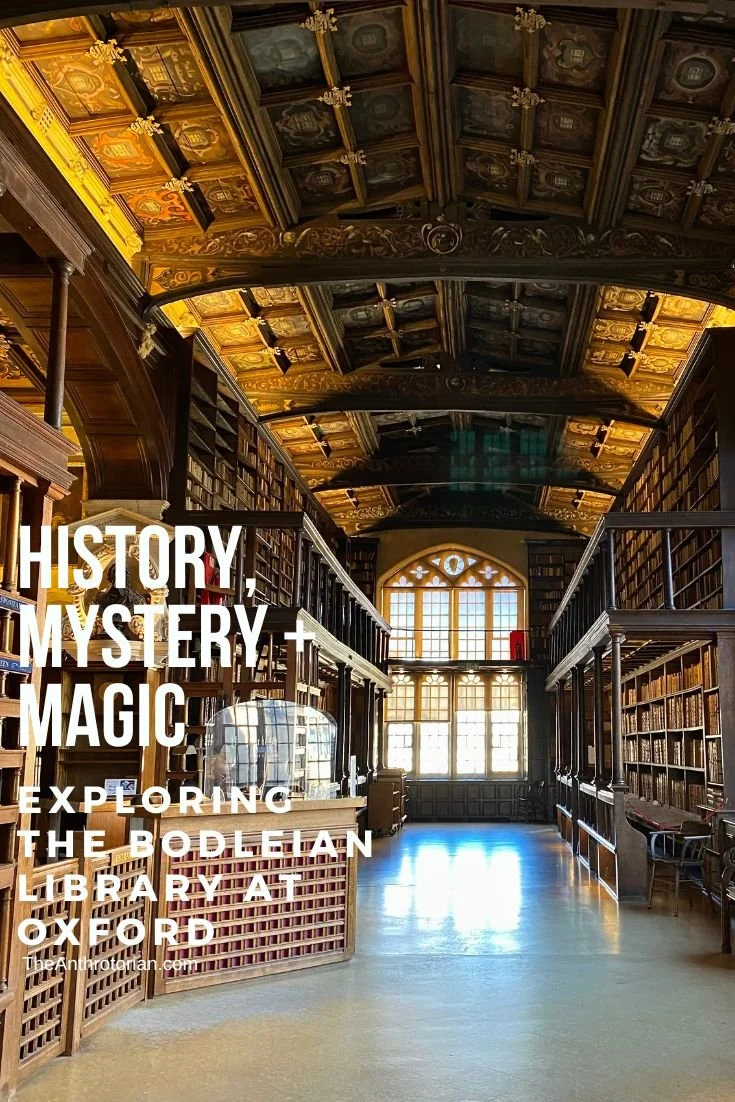
The Bodleian Library, affectionately known as "the Bod" to those that frequent it, is more than just shelves full of ancient books — it is a depository of historic knowledge and a cornerstone of Oxford University’s storied history.
On a recent visit to the UK, I boarded a train at London Paddington station that deposited me in Oxford about 45 minutes later. I walked down the historic street, filled with pubs, cafes, and shops, that took me straight to the library.
Main entrance to the courtyard in front of the Bodleian Library at Oxford.
A statue of William Herbert, the third Earl of Pembroke, stands in front of the library entrance.
After wandering around the exterior, the interior courtyard, and taking in the impressive Radcliffe Camera, I headed to the visitor centre to book my tour of the Bod — the only way to access the library if you are not a student, professor, or someone with special permission.
The Radcliffe Camera is part of the Bodleian Library, and is home to the i History Faculty Library (HFL).
The tour guide walked us past the gates where those allowed in were separated from those that could only view the main floor Divinity School, and took us to a white marble staircase that led to the top floor.
Side Entrance of the Divinity School on the main floor of the Bodleian Library.
The Divinity School on the main floor of the Bodleian Library.
Detail of the ceiling of the Divinity School on the main floor of the Bodleian Library.
Walking into the high-ceilinged space filled with dark wooden bookshelves stuffed with thousands of years of history felt like a combination of stepping back and time, into a dream, or into a movie. Most of all, what hit me was the smell — NOTHING smells as good as a historic library.
A brief history of the Bodleian Library
The origins of the Bodleian trace back to 1320, when the University of Oxford established its first library above the Divinity School.
Originally known as the Duke Humfrey’s Library, it was named after Duke Humfrey of Gloucester, a prominent 15th-century patron who donated hundreds of manuscripts to the university. The library fell into neglect by the 16th century, with many of its manuscripts being taken or destroyed during the Reformation.
The library’s revival began in 1598, when Sir Thomas Bodley, an Oxford alumnus and diplomat, pledged his wealth and connections to restore it.
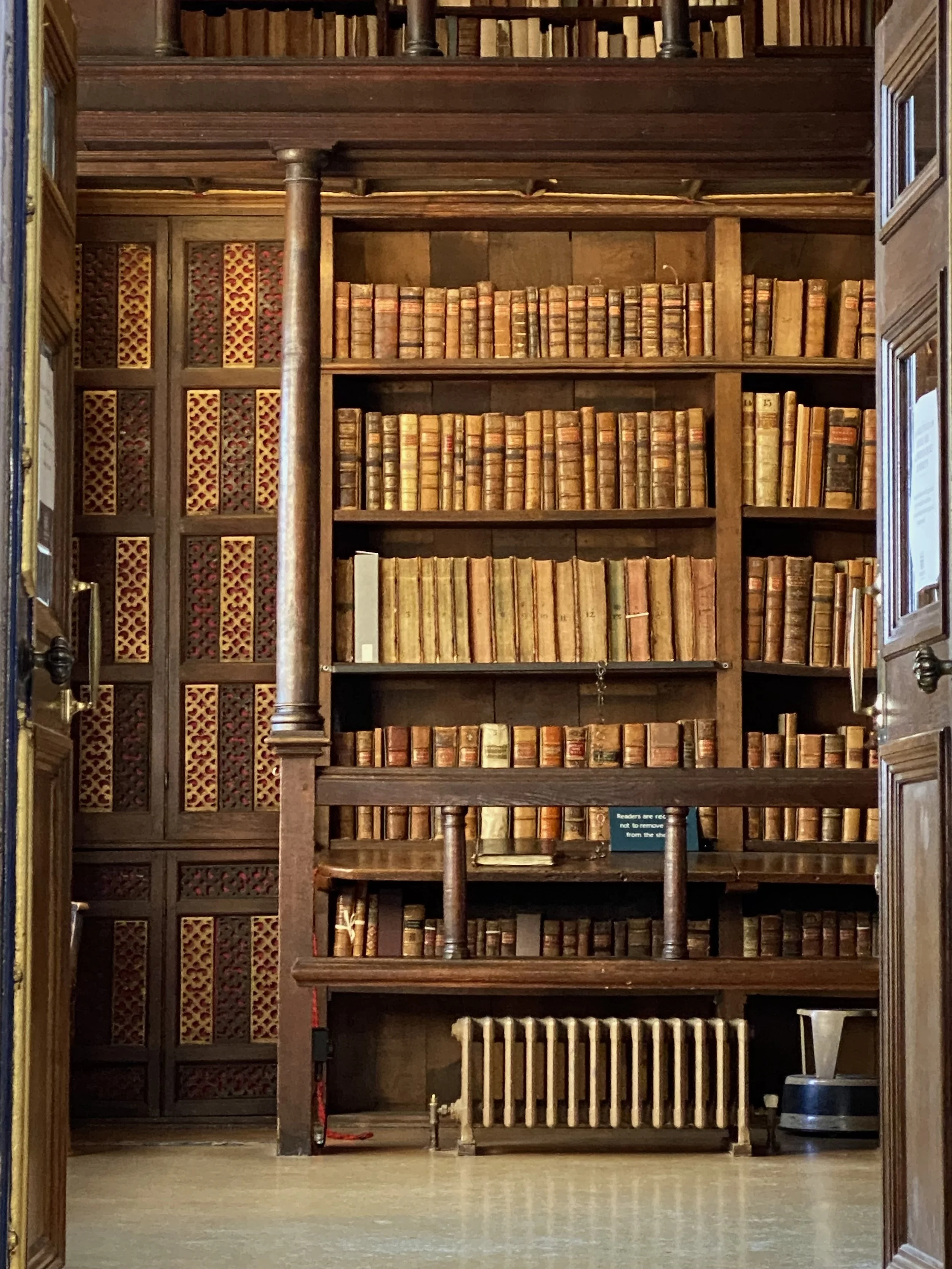
First glimpse of the Bodleian Library from the staircase.
In 1602, the refurbished library reopened with a new cataloging system and a groundbreaking arrangement: Bodley struck a deal with the Stationers’ Company of London, ensuring that the library received a copy of every book published in England. This legal deposit status, which continues today(!!), was instrumental in building the library’s vast collection. So vast, in fact, that our guide told us that there are 100s of warehouses that store the more than 13 million books, all catalogued, so that if anyone needs to access them, they will be brought from the warehouse for their use!

The Bodleian Library rapidly expanded in size and influence, necessitating the construction of additional buildings. The Radcliffe Camera, completed in 1749, became an iconic reading room, while the New Bodleian (now the Weston Library) opened in 1946 to house special collections. The library has evolved over centuries to accommodate modern needs, including digital resources and climate-controlled archives, but its historical essence remains intact.
Legends and secrets of the Bodleian
The Bodleian Library’s maze of corridors and ancient rooms seem to suspend time. Its most famous reading room, the Duke Humfrey’s Library, is a stunning medieval space that feels almost sacred.
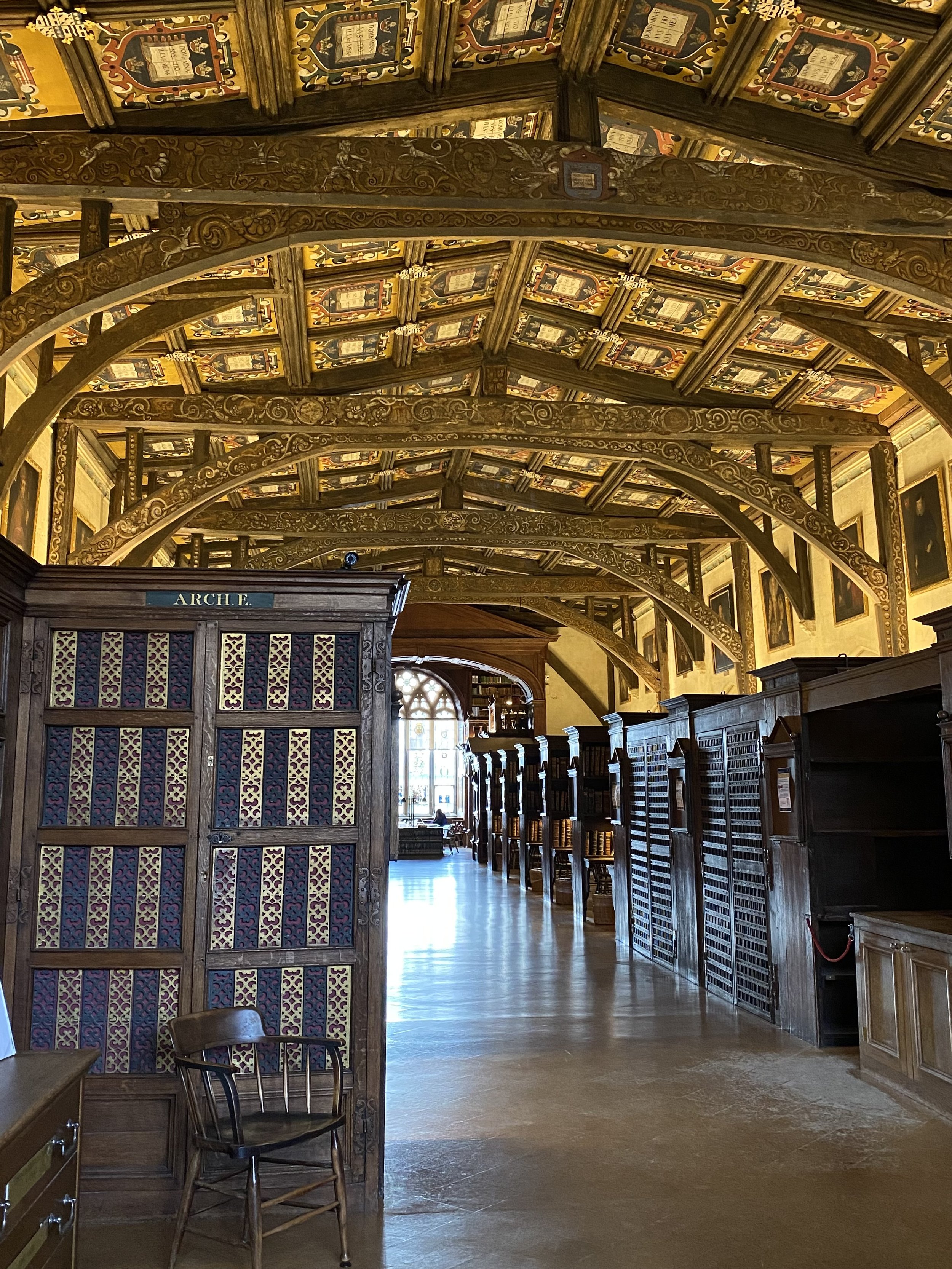
The Duke Humfrey’s reading room at the Bodleian Library has a painted ceiling depicting the coat of arms of the various benefactors and the University.
Legend has it that the library holds secret collections, inaccessible to all but a select few. While much of this is speculation, the restricted areas and vast subterranean stacks fuel imaginations.
Adding to its mystique is the library’s famous declaration: "No books are to be removed from the library." This rule, fiercely upheld since the library’s founding, underscores the sanctity of the collection. Even King Charles I was famously denied permission to borrow a book — the room that was set aside for him to read in is still intact, and pointed out proudly by the tour guide during your guided tour.
Movies filmed at the Bod
The Bodleian’s incredible architecture has served as a filming location for numerous movies and TV series, adding an air of cinematic magic to its already mythical reputation.
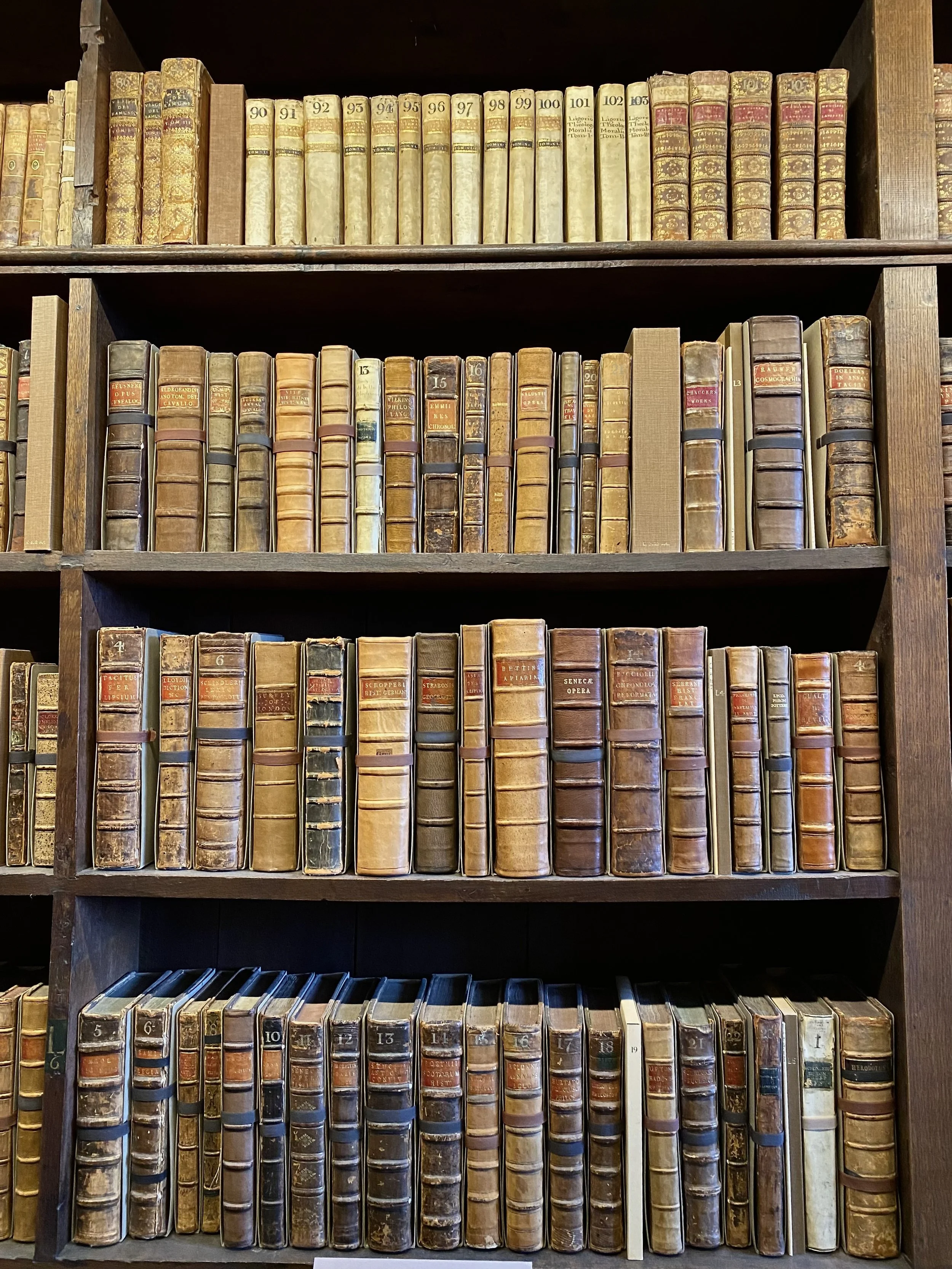
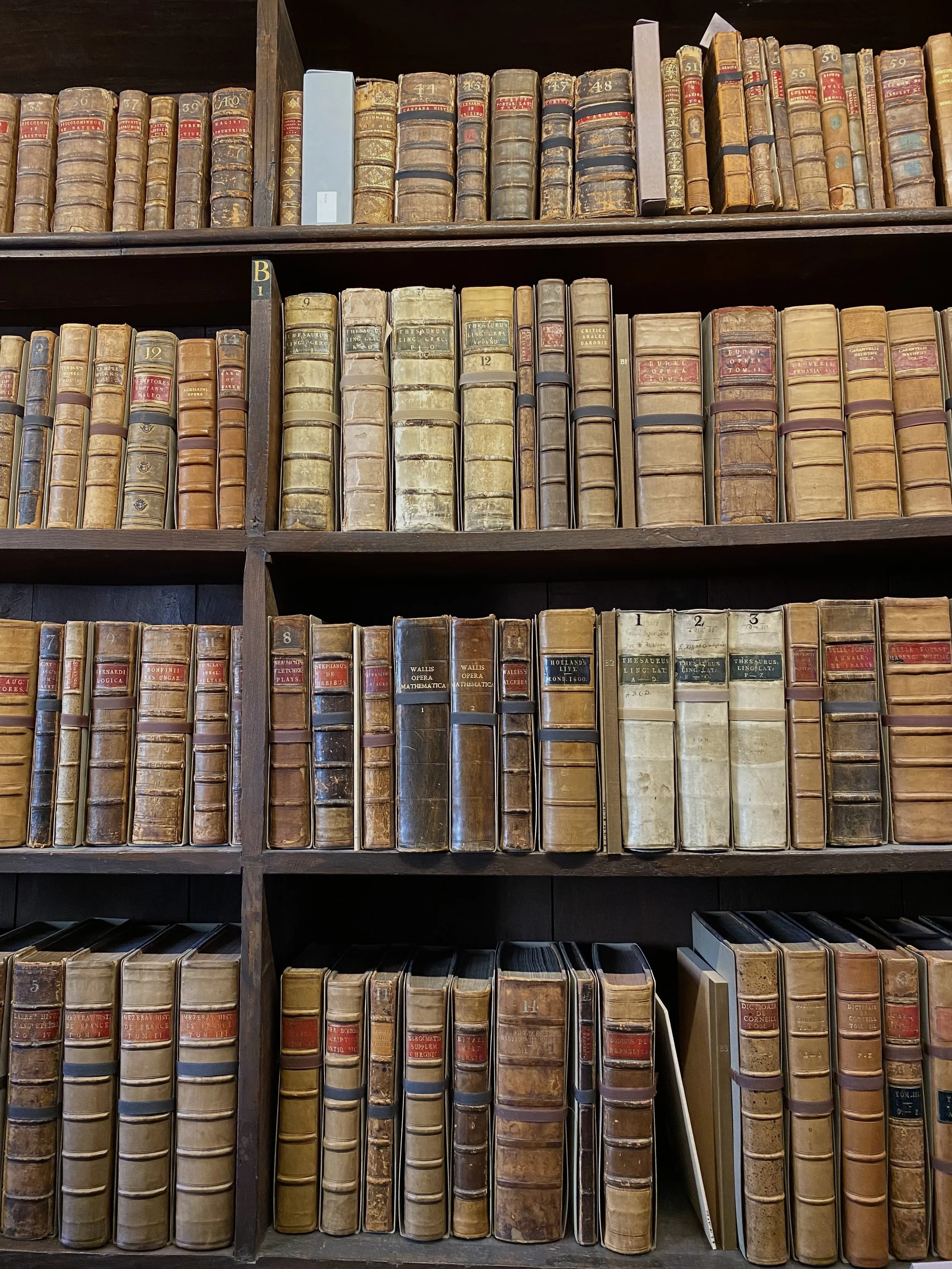
Here are just a few of note:
Harry Potter: The library’s Duke Humfrey’s Library doubled as the Hogwarts library in the Harry Potter films.
The Golden Compass: The library’s grand interiors appear in the movie adaptation of Philip Pullman’s fantasy novel.
The Theory of Everything: Scenes depicting Stephen Hawking’s time at Oxford were filmed here.
Famous contributors and treasured tomes
The Bodleian Library owes much of its prestige to the extraordinary individuals who have contributed to its growth and its unparalleled collection.
Famous contributors and books include:
Sir Thomas Bodley’s vision was supported by donors and scholars like John Selden and Robert Cotton, who enriched the library with rare manuscripts and illuminated texts.
J.R.R. Tolkien and Lewis Carroll, both alumni of Oxford, also frequented the library, with Carroll’s famous book Alice’s Adventures in Wonderland inspired by Oxford’s surroundings.
Among its most famous holdings are a Gutenberg Bible (one of the earliest books printed with movable type), Shakespeare’s First Folio, and the Magna Carta.
The library also houses illuminated manuscripts in incredible condition, like the Luttrell Psalter.
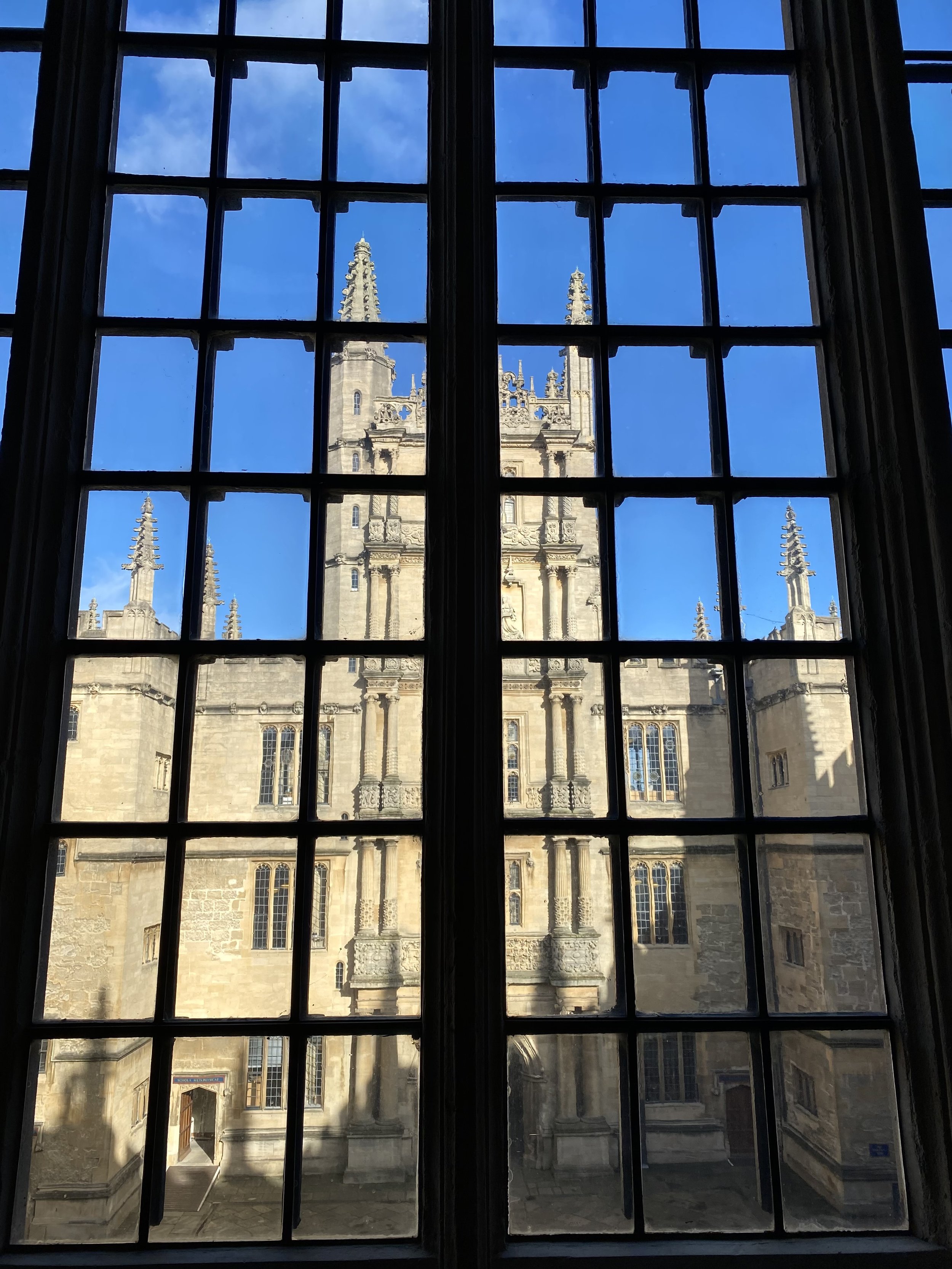
View from one of the large windows in the Bodleian Library at Oxford.
How to visit the Bodleian Library
While some parts of the Bodleian Library is open to the public for tours, its reading rooms are largely reserved for scholars.
If you would like to access the library for research, you must:
Register as a reader: Scholars need to apply for a reader’s card, providing proof of their academic or research credentials.
Swear the Bodleian Oath (yes, really): This centuries-old tradition requires readers to swear not to "kindle a fire or flame" in the library and to "not remove any book."

The Bodleian Oath is a vow you have to take before you can become a reader at the Bodleian Library at Oxford.
For tourists, guided tours are the only way to get access to the library. Note that you will not get access to all of the reading rooms on a standard tour.
Tips for planning your visit
Book in advance: Tours can sell out quickly, especially during peak tourist seasons.
Be respectful of photography restrictions: While photography is allowed in some areas, others, like Duke Humfrey’s Library, are off-limits for cameras. Remember that this is a working library, and university — not just a tourist attraction.
Explore the the rest of campus: The Bodleian is just a small part of Oxford’s main center, so take time to explore some of the other historic spaces and incredible museums.
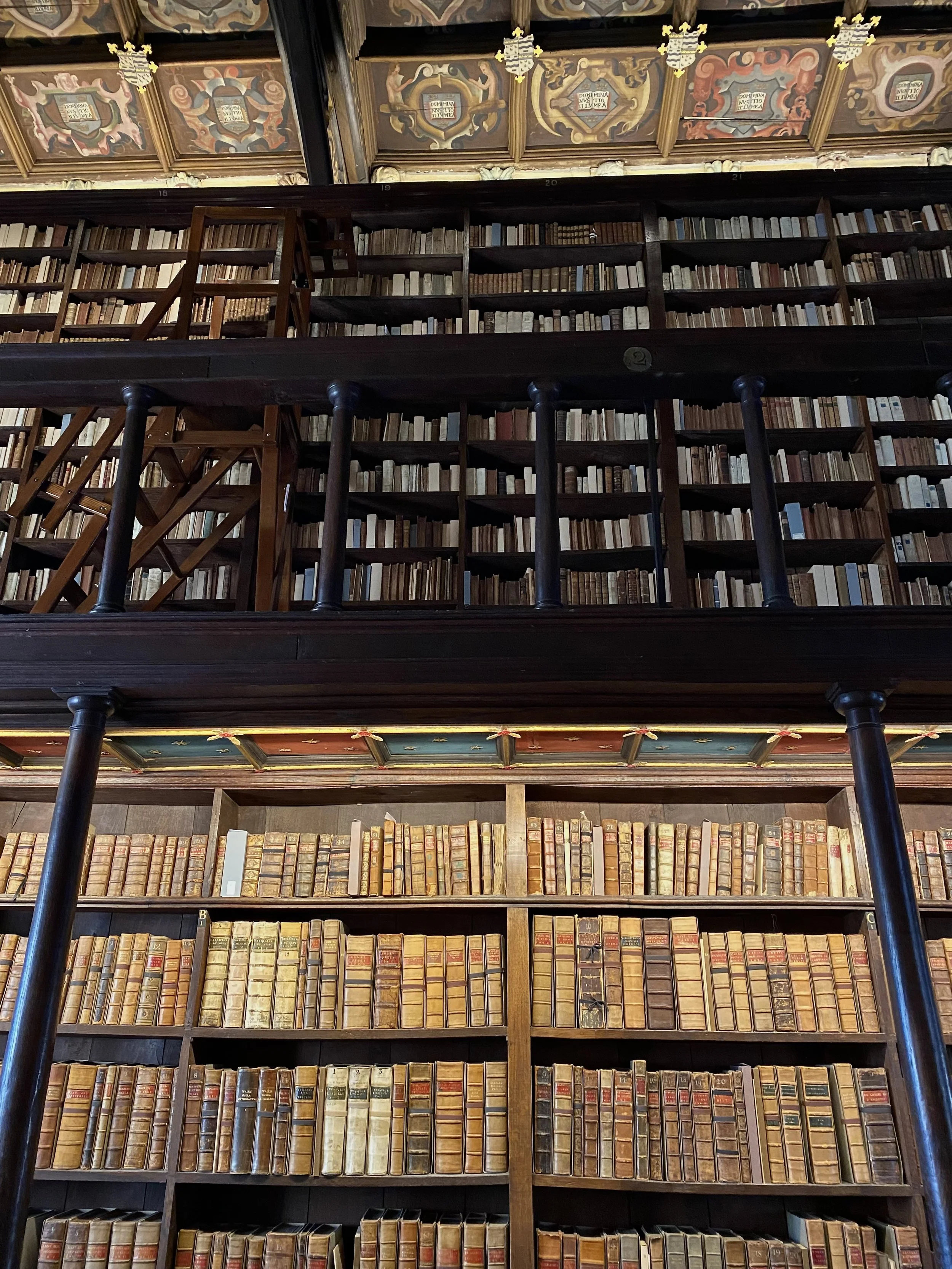
The Bodleian Library is not just a place to store books — it is a living monument to human curiosity, creativity, and knowledge, in other words, an EPIC library.
Whether you’re a scholar delving into its archives, a tourist who wants to breathe in history and stare in awe at shelves filled with ancient books, or a movie fan who wants to feel a little bit like Harry, Ron, or Hermione, visiting the Bodleian is a must-have experience.
Keep reading!

Meet The Author
Lindsay Shapka is an avid traveler and the creator of The Anthrotorian — a website dedicated to sharing travel tips, stories about adventures, culture quirks, artists you should know, fascinating bits of history, and more!
She is also an artist, marketing specialist, editor, and freelance writer who has work featured on websites, blogs, and in magazines like National Geographic Traveler.









Lisbon is one of my favourite cities in the world! Sun drenched squares, colourful architecture covered in elaborate tiles, charming locals, amazing coffee, bakeries everywhere, amazing views, and easy-to-navigate public transit — what’s not to love!?
Here’s everything you need to see, eat, and experience in Lisbon on your next trip.