Reads For The Road: "Turn Right At Machu Picchu" by Mark Adams

by Lindsay Shapka in , ,


Mark Adams' Turn Right At Machu Picchu is everything that I love in a book. It is a non-fiction, well-researched travel tale that contains entertaining characters (that are real people!), vivid descriptions and inspires me to be a better writer and go on more adventures! As you can imagine, I haven't found many books that fit that criterion. 

People used to be travelers Mark... Now they’re tourists. People want hotels, cafes, the Internet. They won’t even camp!
— excerpt from page 2 of "Turn Right At Machu Picchu"

Adams takes readers through his research and real-life experience on Machu Picchu and other Inca ruins, their rediscovery (and the controversy around who really "rediscovered" it), and what it really was (temple, summer home, tomb). He also recounts some fascinating stories that he is told by locals, and guides who have been exploring the region for years. 

It's funny, interesting, and just a really fantastic read. 


Visiting Cambodia: Monkeys, Temples & Khmer Rouge History

by Lindsay Shapka in , , ,


A trip to Cambodia can be pretty intense.

Monkeys run through ancient temples that seem to grow out of the jungle. There are no conventional traffic rules. In fact, sometimes it seem like there really aren't any rules at all — at least not the ones that we follow in North America. 

It isn't rare for an elephant to try and steal your lunch while you dine on an outdoor patio, and there are still land mines everywhere making it unsafe to wander off beaten paths. 

Khmer Rouge History

In order to make the most of any trip to Cambodia, you have to understand the not-so-pleasant history of the Khmer Rouge (aka why there are land mines everywhere).   

The Khmer Rouge ruled Cambodia from 1975-1979, and was one of the most lethal regimes of the twentieth century. Through their methods of agrarian communism, they had the entire country working on collective farms, or forced labor projects, growing food that they were not allowed to eat and watching their families die around them.
The regime killed anyone in connection with the former government, professionals, intellectuals, anyone wearing glasses, non ‘pure’ Cambodians, homosexuals and people who had come from urban communities. They even regularly purged within their own organization. No one was safe under Khmer Rouge rule.
People were divided into two categories: the Old People who had grown up on farms and never left them for the big cities, and the New People who they ruled using the motto “To keep you is no benefit. To destroy you is no loss”.

After four bloody years in power, they were removed in 1979 by the Socialist Republic of Vietnam.

More than 2 million people were killed. 2 million. There is no exact number yet. They are still counting the dead.

Pol Pot, Brother Number 1 (the leader of the Khmer Rouge), died on April 15, 1998 and was never put on trial.

In 1997, Cambodia appealed to the UN to set up a genocide tribunal, but it wasn’t until 9 years later, when many high ranking officials were dying of old age, that it actually came into being. In 2007, Nuon Chea, Brother Number 2, was taken into custody for “alleged crimes against humanity”.

The country is now in the midst of rebuilding itself socially, economically and most importantly, psychologically. Like many countries in South East Asia, Cambodia is turning to tourism as a financial way to rebuild their nation, and it seems to be working.

Spots To See

Angkor.jpg

The temples at Angkor make up the largest freestanding religious complex in the world, and are visited by thousands of people every year by boat, plane, bus, car and tuk-tuk. There is nothing like walking through a ruined temple being both held together and torn apart by the jungle growing on, over and through its walls. At the end of the day monkeys run by as the air cools, and monks in saffron robes walk slowly and thoughtfully down the ancient stone corridors. It is definitely a sight to see, and one of the most incredible spots I have ever travelled to.

But, there are other things to see in Cambodia too! 

The Mekong River is one of the largest in the world and is the home of some of the world’s only freshwater dolphins and floating villages that are a photographers dream.

Phnom Pen is a mecca of colorful markets selling clothing, fabric, shoes, jewellery and anything else you can imagine (and things that you can’t) for pocket change.


A trip to Cambodia could not be complete without a trip to the beach! Shianokville is the main beach town with great access and wide range of accommodation. The sand is white and the water is the perfect temperature. It shares its coast with Thailand, and the beaches are much the same, but underdeveloped. 

Other (more serious, yet important) attractions draw attention to the Khmer Rouge era.  

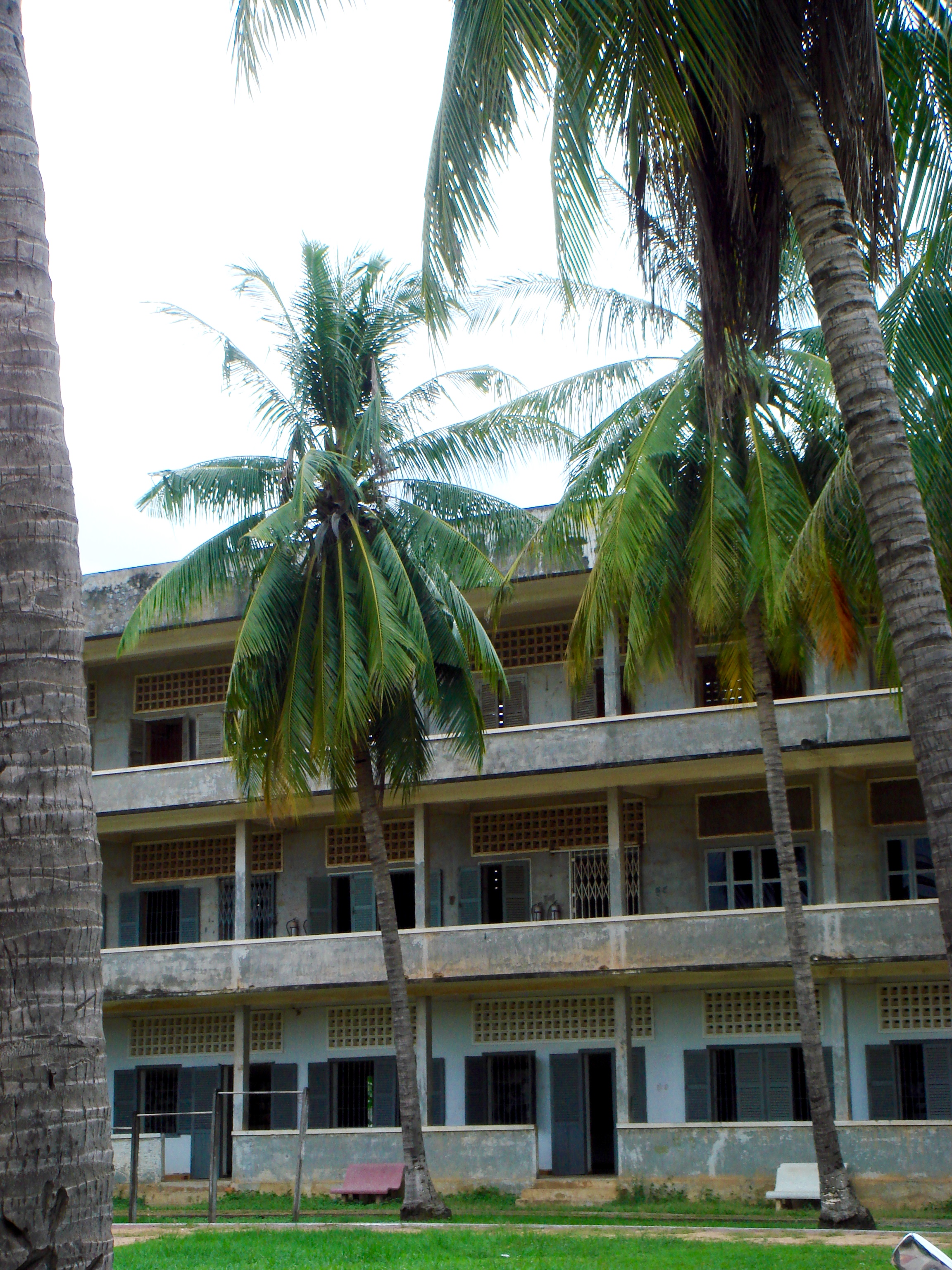
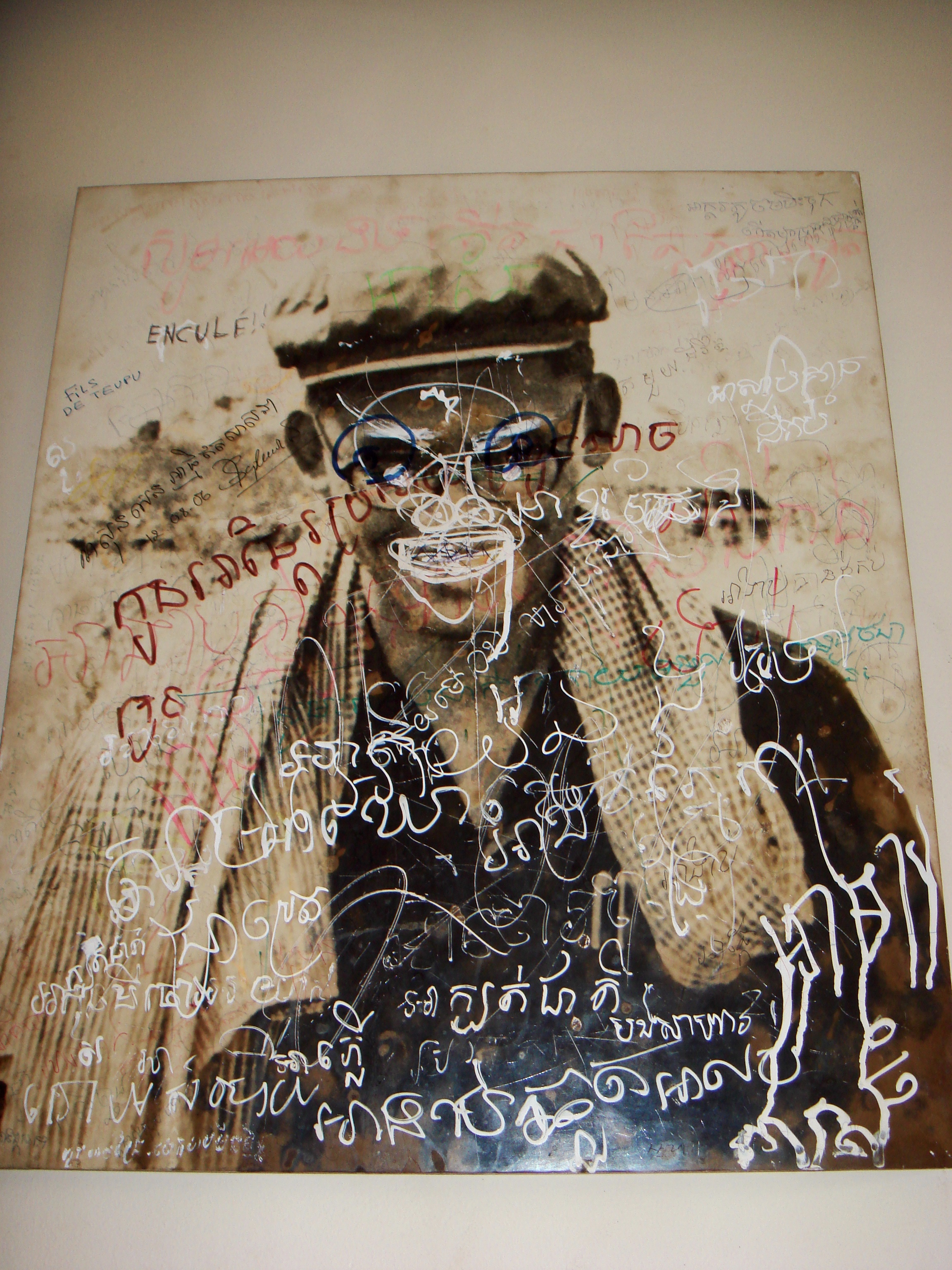
The Tuol Sleng Museum sits innocently amongst narrow side streets, apartment buildings and houses. Once a high school, it was converted into the largest centre of detention and torture in Cambodia. Named Security Prison 21 (S-21), it now houses a collection of photos of the both inmates, and floors of cells that have been left relatively untouched. Photos of Khmer Rouge leaders are also on display covered in graffiti, with cigarette burns for eyes. The space on the wall where the photo of Pol Pot should be lies empty. The photo was stolen and no one bothered to (or wanted to) replace it. 

The Killing Fields, located just outside the city, are an unexpectedly small area that is covered in lush green grass. A massive glass pagoda stands at the entrance, piled high with skulls, femurs and other bones of the dead. The fields themselves are just that — fields. Crude signs mark the mass graves, listing the number of dead that have been found there. But not everyone has been removed. Bones protrude from pits and pathways, and the clothes of the dead become visible as the ground erodes away.

No matter where you go in Cambodia, one thing stays consistent, the children. They are everywhere. They surround you at the temples trying to sell you anything and everything in perfect English. They flirt like adults and they are so confident and straightforward, that sometimes it is only their size that can remind you that they really are children. They walk the streets hanging off your arms, looking up at you with big brown eyes, begging for food, money or anything. They are heartbreakingly cute. 
Whatever you do though, don't give them money. It won't help.  

There are few places in the world that truly surpass expectations, and Cambodia blew all of mine out of the water. I felt all my senses heightened when I was there, and found the adventure exhilarating. I hope you feel the same way — happy travels! 


Travel Quotes To Inspire Your Next Adventure

by Lindsay Shapka in , ,


“Creativity is not a competition.”
—Autumn Sky Hall

“The cost of not following your dream, your heart, or your gut, is spending the rest of your life wishing that you had.”
—Unknown

“To move, to breathe, to fly, to float, to gain all while you give, to roam the roads of lands remote, to travel is to live.”
—Hans Christian Anderson

“If it scares you, it might be a good thing to try.”
—Seth Godin

“Above all, try something.”
—Franklin D. Roosevelt

Good things come to those who book flights.
— Unknown

“the earth has music for those who listen”
—Shakespeare

“One of the great things about travel is that you find out how many good, kind people there are”
—Edith Wharton

“If you look like your passport photo, you probably need the trip.”
—Unknown

“I can’t think of anything that excites a greater sense of childlike wonder than to be in a country where you are ignorant of almost everything. Suddenly you are five years old again. You can’t read anything, you have only the most rudimentary sense of how things work, you can’t even reliably cross a street without endangering your life. Your whole existence becomes a series of interesting guesses.”
—Bill Bryson, “Neither Here Nor There: Travels in Europe”

“Of all the books in the world, the best stories are found between the pages of a passport.”
—Unknown

“Better to see something once than to hear about it a thousand times.”
—Asian Proverb

“If we were meant to stay in one place, we’d have roots instead of feet.”
—Rachel Wolchin

“My favourite thing is to go where I’ve never been.”
—Unknown

"Go out in the woods, go out. If you don’t go out in the woods nothing will ever happen and your life will never begin."
—Clarissa Pinkola Estes

“The Bhagavad Gita—that ancient Indian Yogic text—says that it is better to live your own destiny imperfectly than to live an imitation of somebody else’s life with perfection.”
—Elizabeth Gilbert from Eat, Prey, Love

“It’s bad manners to keep an adventure waiting.”
—Unknown

“After all, one travels in order for things to happen and change; otherwise you might as well stay at home.”
—Nicolas Bouvier

“I am not the same, having seen the moon shine on the other side of the world.”
—Mary Anne Radmacher


Why I Always Go For a Run In a New City (and you should too!)

by Lindsay Shapka in , ,


Some of my favourite travel memories have come from runs that I have gone on in foreign countries.

I'm not talking about organized races with thousands of participants. No, I'm talking about a solo jog that forces you to wake up early before the crowds take over the street and shows you a side of the city that you would never see if you were just walking around. 

Why is running in a foreign city so great?

Well, first of all, you are usually up earlier than normal, which means that the streets are empty giving you an unobstructed view of the city. The warm morning light illuminates stonework that you never saw before and you can almost imagine what it would be like to live there.

And that moves me to my next point — if you are running in a country where physical activity is normal, you become almost invisible, you are now looked at as a local, part of the place, and not a tourist. (On the other hand, if you are visiting a country where going for a run isn't normal, it will be painfully obvious. In some countries I was completely ignored when I ran by, in others I was stared at, and in others I have been yelled at and whistled at. But, I have never felt threatened.)

Not bogged down by cameras, guide books, and bags full of miscellaneous items that you would normally take out on a day of touring around, you are truly free to just take in the sights and sounds of the new would around you.  

Running has taken me past Frances Mayes' house in Tuscany, through the royal gardens at the Schonbrunn Palace in Austria, over cobblestone streets in Amsterdam, and past ruined buildings and over white sand in Phuket. 

Give it a try — you never know where your feet might take you! 

Related Posts


5 Reasons Why You Should Visit Hong Kong

by Lindsay Shapka in , , ,


Hong Kong is a fascinating place to travel to. It is constantly changing, modern yet traditional, full of Western businesses and democratic ideals yet ruled by the more austere communist-China way of life. The people who live there love dim sum and pizza, and never seem to stop moving.

You may be surprised to learn that most of Hong Kong is green (other than the mass of high-rises that make up Hong Kong Island of course), with beautiful hills for hiking, and plenty of outdoor activities. Another surprising fact is that the four main areas — Hong Kong Island, Kowloon, the New Territories and the Outlying Islands — are made up of more than 200 islands!!  

Because of more lax regulations regarding visas, it is also one of the few places in China that can be accessed by most of the world without one. This has led to it becoming an international hub for people who are waiting to receive visas to enter the rest of the country, or other countries nearby (aka an excellent place for serious people watching).

Here are some things to do, and reasons why I think Hong Kong is worth adding to your travel list:

1. Amazing, easy to navigate public transportation

There is a comprehensive system of trains (one that passes under the harbour area!), boats, and busses that can get you anywhere you want to go quickly and easily. They are modern, clean, and there is even a high-speed train that will take you directly to the airport! 

One of the tenement buildings in Kowloon

2. Kowloon

Meaning "nine dragons" in English, this is where you will find a blend of locals, expats, and tourists from all over the world. It is where opulent hotels sit across from crumbling tenements, stores selling cheap knock-offs are wedged between high-end shops, and there is non-stop chaos day and night — it's wonderful! There are markets, shopping centres, great restaurants, street food, and an incredible view of the harbour and the buildings of Hong Kong Island.  

3. English-speaking friendly

Unlike other parts of China, there is a lot of English signage and many people speak English here. This is a result of Hong Kong being an English colony for so long.

The view of Hong Kong Island from Kowloon

4. Hong Kong Island

One of the largest islands, there is SO much to see and do here. Ride the outdoor Mid-Levels Escalator, the longest in the world, that transports pedestrians 800m from Queen's Rd Central via SoHo all the way up to Conduit Rd in Mid-Levels in 20 minutes. It passes through areas with incredible nightlife, so is a lot of fun to explore at night.

You can also check out Li Yuen St East, Li Yuen St West and the Graham St market which are right out of a movie with narrow pedestrian alleyways crammed with shops selling everything from bags to shoes to frogs legs. 

Spiral incense at there Man Mo Temple 

The spiral incense-filled Man Mo Temple built in 1847 is one of the oldest in Hong Kong, and is an absolute must-see. 

Inside the Po Lin temple on Lantau

5. Lantau

Twice the size of Hong kong Island, this uncrowded, forest filled island has a massive monastery and temple complex called Po Lin on one of its highest points.

The temple is beautiful, but the real draw is the Tian Tan Buddha Statue (pictured above) that is the world's largest outdoor seated bronze buddha and can be reached by a steep climb of 260 steps.

My favourite part of visiting Lantau was riding the Ngong Ping 360 cable car which has one of the most incredible views I have ever seen!

Related Posts


Everything You Need To Know About Shopping For Unique and Meaningful Travel Souvenirs

by Lindsay Shapka in , , ,


It is inevitable (unless you have A LOT of willpower) that you are going to bring back souvenirs from your travels. But, you have to be careful not to let yourself get swindled or carried away.

Here are a few tips on how to find unique trip mementos and locally made gifts that will remind you of adventure every time you see them, rather than gather dust in the back of your closet. 

Don't get lost in the novelty

When immersed in a market in Morocco, it is easy to think that buying a silver tea set with a beautifully etched tray is a fantastic idea. They are cheap, they are everywhere, and they are SO beautiful. BUT, consider this — do you drink tea? If you do drink tea, do you drink it out of tiny cups that will come with your Moroccan tea set, or do you like big, oversized mugs? Basically, will you use this tea set or have a spot in your home to display it, or will it sit in your cupboard? Ask these questions about every purchase you make. Are harem pants really something you will wear outside of Thailand? Do you really need a carving of a camel? 

Shop around

Markets or street stalls may seem random and like they have completely unique items, but you will soon notice that a lot of the items sold are mass produced. Wander through the market a few times to get an idea of where you can find the truly unique items before making a purchase.

Check that you are getting what you are paying for before you hand over your money

There are no returns at market stalls, and often the seller will disappear to grab a bag or change for you while still holding your items. Don't leave until you ensure that what is in your bag is what you want. I made the mistake of forgetting to do this, and ended up coming home with two left shoes from Marrakesh. 

Research prices

If you want to make sure you aren't getting swindled, do some research ahead of time to figure out the approximate prices for different items. Travel books are a great place to start, but blogs and Google searches can give you some general information as well. 

Buy items that you will actually use

I know this sounds like common sense, but it is SO easy to get wrapped up in the novelty of a place when you are actually there. Do you collect art? Buy a piece to add to your collection. Do you read? Purchase some books. Jewellery, scarves, fabrics, lanterns (if you will use them), home decor items, etc are also great options if you have the space and use for them. 

Try to buy from local artisans

For really authentic items, and to support local artists, look for stalls that are selling unique handcrafted items (usually the artist will be making them as he/she is selling them), or head out of the marketplace to local boutiques where you will find fewer mass produced items. Then, have a conversation with the artist you are supporting. This will connect your item to a memory, taking you back to that moment every time you see it once you are home. 

Haggle, barter and bargain like a pro

Click here for my post about bargaining like an expert to get the best deal that you possibly can — and have some fun in the process. 

Related Posts